Head to head / curated pair / cycle 04
Firebase Studio vs Lovable
Both products were given the identical 9 prompt vibeOps specification, 5 times each. Nothing on this page is an impression, all of it is a measurement from the same harness.

Lifecycle notice, August 22, 2026: Google is sunsetting Firebase Studio on March 22, 2027, after which new workspaces can no longer be created. Google's stated migration paths are Google AI Studio and Google Antigravity, which is measured separately on this board, and the guide is at https://firebase.google.com/docs/studio/migrating-project. Everything below was measured while the product is fully available and is not discounted for a date seven months out. The widest integration surface of any builder we measured: auth, storage, scheduled functions and a managed datastore all attach without leaving the workspace. It pays for that in wall clock, since every prompt round trips through a provisioned cloud workspace rather than a local sandbox. Public pages came back client rendered unless server rendering was asked for by name, which is what holds the SEO subscore down.

Strongest single shot agent in the cohort. It read the tenancy requirement in prompt 1 without being told twice and carried the organisation scope through every later prompt. It lost points on the machine facing surface: webhook signing needed an explicit follow up in 3 of 5 runs, and the generated API had no idempotency handling.
Index gap
0.38
Firebase Studio leads
Axes won
6 / 4
Firebase Studio versus Lovable, of 10 axes
Lower turn latency
Lovable
85.2 s per prompt
Higher pass rate
Firebase Studio
86.7%
Every measurement, side by side
Cyan marks the better figure on each row. The delta column is the first product minus the second.
| Measurement | Firebase Studio | Lovable | Delta |
|---|---|---|---|
| Composite index | 80.92 | 80.54 | +0.38 |
| Agent performance (weight 18) | 79.0 | 89.0 | -10.00 |
| Reliability (weight 18) | 86.7 | 82.2 | +4.50 |
| Scalability (weight 13) | 87.0 | 78.0 | +9.00 |
| SEO and GEO (weight 12) | 73.0 | 75.0 | -2.00 |
| API and MCP (weight 9) | 79.0 | 66.0 | +13.00 |
| Integrations (weight 8) | 90.0 | 86.0 | +4.00 |
| Design output (weight 7) | 72.0 | 92.0 | -20.00 |
| Turn latency score (weight 7) | 65.0 | 76.5 | -11.50 |
| Value (weight 5) | 92.0 | 72.0 | +20.00 |
| Code ownership (weight 3) | 84.0 | 79.0 | +5.00 |
| Median turn latency, seconds per prompt | 100.3 | 85.2 | +15.10 |
| p10 seconds | 65.8 | 52.6 | +13.20 |
| p90 seconds | 161.3 | 133.1 | +28.20 |
| Full spec, minutes, derived | 15.0 min | 12.8 min | +2.20 |
| Executions failed | 1 | 2 | -1.00 |
| HTML bytes, no JS | 22.0 KB | 18.0 KB | +4.0 KB |
| LCP milliseconds | 1,980 | 2,140 | -160.00 |
| CLS | 0.050 | 0.060 | -0.01 |
| Entry price | No cost | USD 25 / month, billed monthly | n/a |
Screenshot diff
Both landing pages, captured by the lab on 14 Aug 2026 at 1440 by 900. Stored locally, never hotlinked.
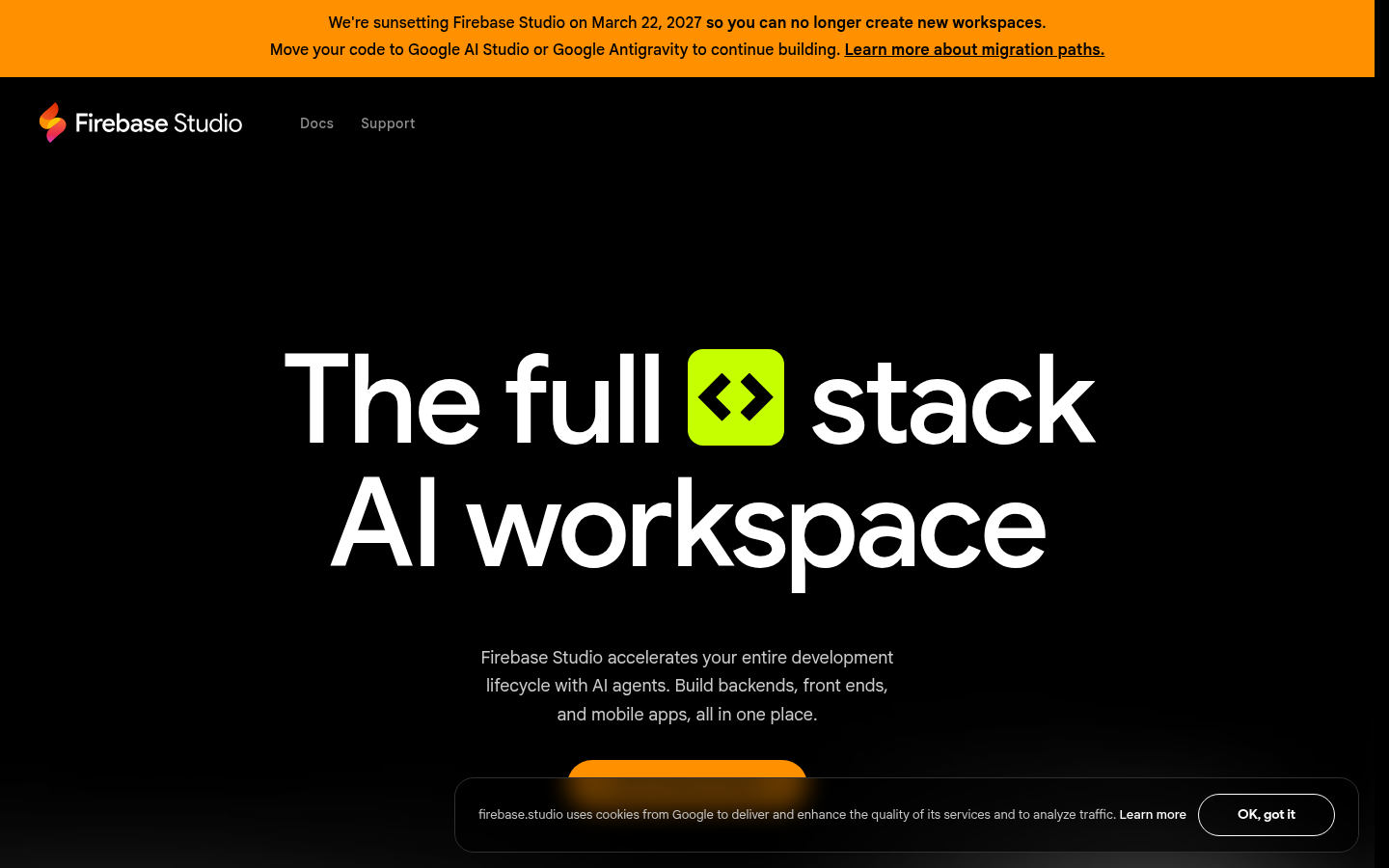
Firebase Studio, captured 14 Aug 2026.
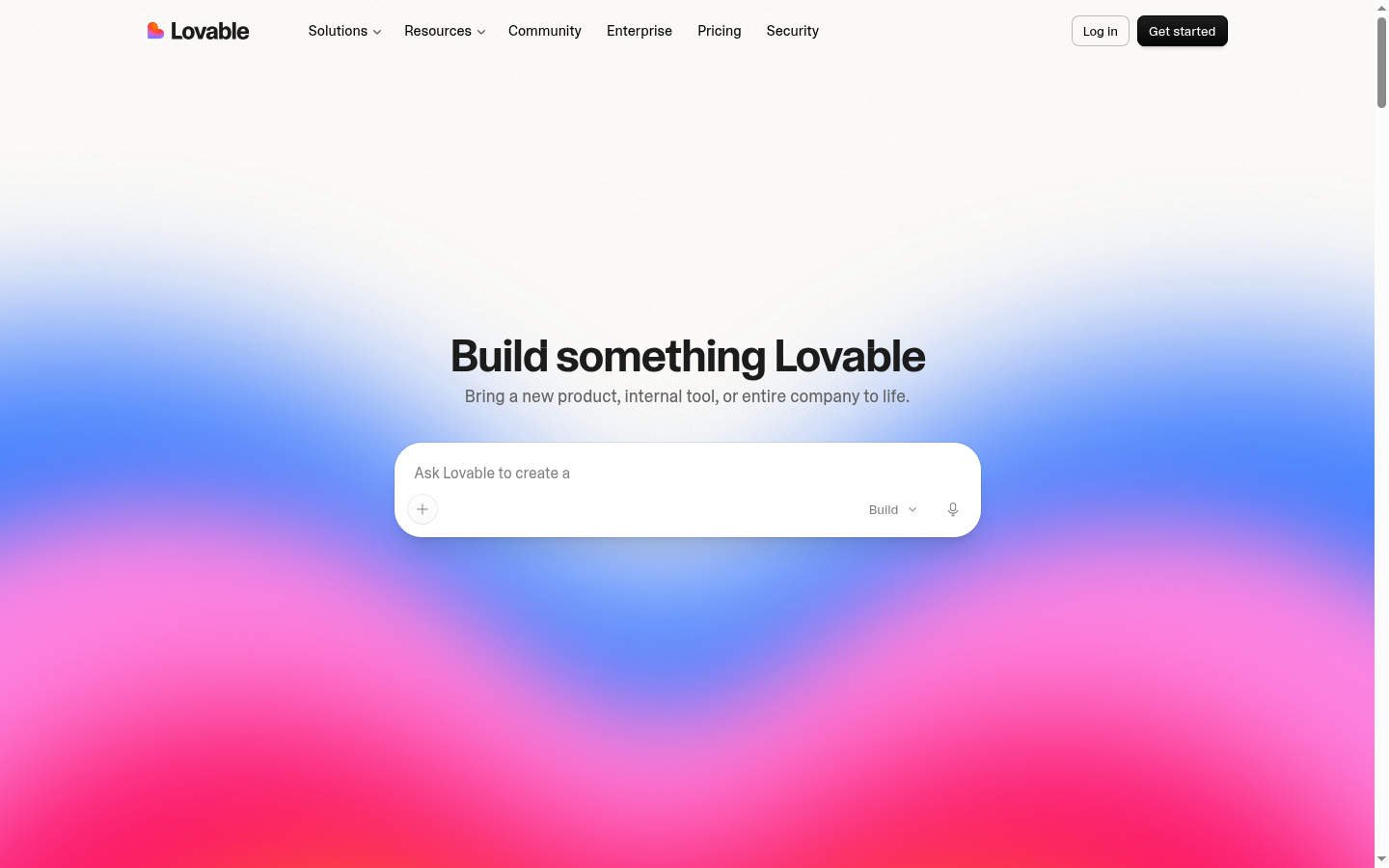
Lovable, captured 14 Aug 2026.
Speed spread on a shared scale
Firebase Studio
65.8 / 100.3 / 161.3 seconds
Lovable
52.6 / 85.2 / 133.1 seconds
Axis by axis, who wins
Firebase Studio wins 6 of 10
- Reliability86.7
- Scalability87.0
- API and MCP79.0
- Integrations90.0
- Value92.0
- Code ownership84.0
Lovable wins 4 of 10
- Agent performance89.0
- SEO and GEO75.0
- Design output92.0
- Turn latency score76.5
Verdict
Firebase Studio takes the composite by 0.38 points. That is inside the noise of a five run sample, so the correct conclusion is that these two are tied on the composite and the choice should come down to a single axis you care about.
If the work in front of you is mostly interface, weight the design and turn latency rows. If it is a product with an API, webhooks and background jobs, weight agent performance, reliability and the API and MCP row, which together carry 45.00 of the 100 index points on this board. If the project has to outlive its vendor, read the code ownership row first and treat everything else as secondary.
Both products in this comparison were measured in the same cycle, on the same specification, by the same harness. The per run data for each is on its product page and in /api/runs.json.